1.
where the uncompressed images requires considerable compression technique, which should be capable of reducing the crippling disadvantages of data transmission and image storage. In the research paper, the novel image compression technique is proposed which is based on the spatial domain which is quite effective for the compression of images. However, the performance of the proposed methodology is compared with the conventional compression techniques (Joint Photographic Experts Group) JPEG and set partitioning in hierarchical trees (SPIHT) using the evaluation metrics compression ratio and peak signal to noise ratio. It is evaluated that Integer wavelets with binary plane technique is more effective compression technique than JPEG and SPIHT as it provides more efficient quality metrics values and visual quality.
rowingly, different images are attained and stored digitally especially in grayscale format, which are usually acquired from special equipments. These images are quite large in size and number in such situation, compression reduces the cost of storage and enhances transmission speed. In the recent period, image compression plays an important role in effective images related operations while for this, it is crucial that compression of images is of minor loss of information from the image, which may cause serious consequences [1]. Conventionally, the image coding techniques are classified as lossless or lossy where the small image information is of significantly important in advance imagining field.
2. G
It is observed that in the recent period, different single or sequences of images can be transmitted over the computer networks to a large distance, which is used for several image analysis and diagnosis purposes. For example, it is essential that images is compressed and transmitted effectively in order to conduct reliable, enhanced, and fast analytical operations performed by several institutions around the world [2]. For this situation, image compression is the significant research problem. However, complexity lies in the adoption of effective compression technique, which is capable of providing high compression and preserved the significant characteristics of the images after the compression process is performed and this is situation of effective compression techniques. The difference coding in the Binary plane technique is proposed and named this technique as modified BPT. This technique is spatial domain technique, which is found better than the Set Partitioning in Hierarchical Trees (SPIHT) and Joint Photographic Experts Group (JPEG) technique [3].
It is identified that several advanced image compression techniques have been developed considering to the growing demands for image storage and transmission. The JPEG 2000 [4,5] combined embedded block coding with the optimized truncation (EBCOT) technique with the lifting integer wavelet transform to perform several advanced features and capable of provide high performance lossless compression as compared to JPEG low bit rate technique. The Wu and Memon [6,7] proposed the context based adaptive lossless image codec (CALIC) approach using enclosing 360 modeling contexts to attain the distribution of the encoded symbols and the prediction scheme. Moreover, William A. Pearlman and Said Amir [8] proposed Set partitioning in hierarchical trees (SPIHT) technique which utilizes the inherent similarities around the sub-bands in a wavelet decomposition of the image. The S.Mahaboob Basha, Dr. B. Sathyanarayana and Dr. T. Bhaskara Reddy [9] proposed a binary plane technique which is used to take advantage of repeated values in the consecutive pixels positions. This research is organized with the following sections where Section 1 provides the illustration of research problem, related paper and the online structure of the paper. Section 2 deals with the illustration of the overview of JPEG technique, SPIHT technique and BPT technique. moreover, Section 3 provide information related to the proposed methodology, section 4 II. 8x8 blocks of pixels where 128 is subtracted from the value of each pixel so that the new effective range is from -128 to 127. 2. Each block is then transformed into an 8x8 block of frequency coefficients as follows
3. Overview of Research Techniques
Where F (v,u) is the frequency coefficient with vertical frequency v and horizontal frequency u and p(y,x) provides the value of pixel in row y an column x of the block. 3. These coefficients are quantized as follows
ð??"ð??" ???? = N ð??"ð??" ???? ?? ???? 4.The entropy encoder is applied to the quantized coefficients i. Limitations of JPEG Technique
? It is observed that the quality of JPEG formatted image is significantly reduced when the image is compressed on a greater level while the compatibility and distribution of data is another major limitation of JPEG [11].
4. b) Overview of Partitioning In Hierarchical Trees SPIHT Technique i. Limitations of SPIHT
? It is observed that SPIHT is quite vulnerable to bit corruption since the single bit error can introduce major image distortion relying on its location. ? The worse factor of this technique is the requirement of accurate bit synchronization as the leak in bit transmission lead to extensive misinterpretation from the side of the decoder as well as high memory requirements is also the major limitation of this technique [15].
? It is also identified that error resilience is not viable by the SPIHT algorithm and in the situation where the signification bits are toggled in the noise The (Joint Photographic Experts Group) JPEG is a international compression standard for the continuous tone image of both colored or grayscale images. However, due to its distinctive requirements of applications the JPEG standard has two fundamental compression methods where the DCT based method is demonstrated for the lossy compression and predictive method specified for the lossless compression [10]. In the paper, researchers have discussed and utilized the lossy compression of JPEG standard method. The basis of the JPEG algorithm is the discrete cosine transforms which extract the spatial frequency information from the spatial amplitude samples where these frequency components are then quantized to reduce the visual data from the image, which is least perceptually apparent thus decreasing the amount of information which should be stored. The redundant properties of the quantized samples are exploited by means of Huffman coding to produce the compressed demonstration.
The JPEG is the lossy algorithm which means that visual information is selectively unnecessary to enhance the compression ratio. The overall algorithm of JPEG is illustrated as follows:
The uncompressed source of data is separated into 5. Then the specification of JPEG table is conducted to attain the compressed image data. However, JPEG decoding performs in reverse to the above steps of the encoding and decoding steps.
? Since the JPEG algorithm is not a lossless approach, the data is usually discarded when the image file is compressed and this limitation is usually noticeable when required to be aggressively compressed or edited [12]. ? Several institutions utilize compressed file for several purposes for instance evaluating the images for particular anomalies where the loss of data using the JPEG algorithm causes the images to be ineffectual for their proper evaluation [12].
It is observed that set partitioning in hierarchical trees (SPIHT) is the image compression algorithm that uses the inherent similarities across the sub bands in the wavelet decomposition of the image. The SPIHT algorithm codes the most significant transform coefficient first and then transmits the bits so that refined copy of the original image can be attained [8]. The SPIHT is based on three principles in three principles which include exploitation of the hierarchical structure of the wavelet transform by utilizing the three basic organizations of the coefficient , partial ordering of the transformed coefficients by magnitude with the data not clearly transmitted but recalculated by the decoder [13]. Finally, it orderes binary plane transmission of the refinement bits for the coefficient values. It leads to the compressed bit stream in which the most significant coefficients are transmitted first and then the values of all coefficients are progressively refined and relationship between the coefficients demonstrating the similar location at distinct scales in completely exploited for the compression efficiency. [14]. channel then the decoder cannot duplicate the execution path of the encoder due to which even a simple bit fault can distort the en process of image [16]. c) data set into other integer data set. This transform is perfectly invertible and gives exactly the original data set. If the input data consist of sequences of integers, then the resulting filtered outputs no longer consist of integers, which do not allow perfect reconstruction of the original image. However, with the introduction of Wavelet transforms that map integers to integers we are able to characterize the output completely with integers. The best example of wavelet transforms that map integers to integers is the S-transform. The 2D S-transform can be computed for an image using equations (1a), (1b),(1c), and (1d). Of course the transform is reversible, i.e., we can exactly recover the original image pixels from the computed transform coefficients. The inverse is given in equations (2a), (2b), (2c), and (2d). The transform results in four classes of coefficients: (A) the low pass coefficients,(H) coefficients represent horizontal features of the image, (V) and (D) reflect vertical and diagonal information respectively. During the transform we ignore any odd pixels on the borders.
I 2i ,2j= A i,j -[H i,j /2] ? (2a) I 2i,2j+1 =A i,j +[ H i,j +1 )/2] ? (2b) I 2i+1,2j =I 2i,2j+1 +V i,j -H i,j ? (2c) I 2i+1,2j+1 =I 2i+1,2j + D i,j -V i,j ?(2d)5. d) Overview of Binary Plane Technique
The binary plane technique is used in the first stage of compression where the compressed file which is usually maintained in two parts , the first part is bit plane which holds the bits '0' for each pixel similar to the previous pixel and bit ' 1' for each pixel different from the previous pixel [17]. While, the second part is the data table which holds only the essential pixel values that is for the set of consecutive repeated values and only one value is stored in the data table. In the technique, the current values are stored in the table if it is not similar as previous value and not stored if it is similar to the previous values and later the bit plane and data table are merged into one file [18]. However, the main aim of this technique is acquiring benefits of the similar value in the consecutive pixels and instead of storing all of them. Moreover, the main advantage of binary plane technique is that it helps to maintain the gray scale value while compression which provides better quality image as compared to other compression techniques. Where PP-Previous pixel, CP-current Pixel, TV-Threshold value then the range of data table will be modified as shown in the figure 1. III.
6. Proposed methodology
In order to conduct the image concerning the compression of the images, the proposed algorithm is used by adopting the following steps: the compression more effective. For instance, if the image file contains the following pixels. IV.
7. Results and Discussion
a) Data Sets
The data sets were standard images and taken for evaluating the proposed algorithm resulting using different evaluation metrics. The proposed technique is evaluated on grayscale images data sets of individuals where one slice was selected from images in the random to evaluate the performance of the proposed methodology.
The novel technique proposed in the research paper is based on the spatial domain of the image and it is quite suitable for the compression of images [19]. The proposed methodology is providing the ways for overcoming the limitations of SPIHT and JPET techniques. It is observed that the proposed techniques are overcoming the loss of data as found in JPEG algorithm during the compression of the images. The errors of bit distortion as observed in SPIHT technique are removed with the implementation of proposed methodology. It is also found that the SPIHT causes the misinterpretation from the decoder while requiring the high memory. The Integer wavelets transform, Binary Plane technique, difference coding technique, and inverse of difference coding technique are used to eradicate the use of extensive memory and reconstruct the image with higher quality. This technique also helps to remove the repeated values within the data to make
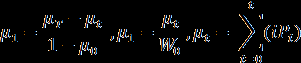
8. ??. ..(4)
Where the larger PSNR values correspond to good image quality [20]. In the research paper, the researcher analyzed the quality metrics CR, PSNR as well as evaluated the images results visually in comparison of the proposed method with the JPEG and SPIHT and observed that the proposed method has provided more effective values of the quality metrics as compared to the JPEG and SPIHT techniques.
Moreover, the visual quality of the compressed image based on the proposed method is much clear and better than the JPEG and SPIHT images as observed in Figure 3. The quality metrics values of CR, PSNR of the proposed methodology is much better when compared to JPEG and SPIHT as observed in the table 2 and hence, it highlighted that the proposed technique is more efficient when compared to the existing two methods.
V.
9. Conclusion
This research paper provides the proposed methodology for the compression of images to be used more effectively which is capable of providing much efficient quality metrics values and visual quality as compared to the existing expression techniques JPEG and SPIHT.
However, for the future study the researchers are suggested to include more attributes of evaluation metrics along with PSNR and Compression ratio in order to analyze the results more efficiently. Moreover, researchers can also review the recent techniques in combination of the proposed methodology in order to attain more effective image results.


| A Lossy Colour Image Compression Using Integer Wavelet Transforms and Binary Plane Transform | |||
| Integer Wavelet Transform | |||
| Integer wavelet transform maps an integer data | |||
| 2012 | |||
| Year | |||
| 128 80 80 80 300 90 90 180 180 180 180 20 20 223 99 99 99 | |||
| Then the bit plane file contains | |||
| 11001101000101100 | |||
| and data file is as below | |||
| 128 80 300 90 180 20 223 99 | |||
| D D D D ) F | |||
| quantization is done for the data table using equation (3) | ( | ||
| PP-TV/2 | PP | ||
| CP | PP+(TV/2-1) | ||
| threshold | |||
| value | |||
| For eg: let us consider a numerical example, if | |||
| the image file contains the following pixels | |||
| CP | PP | RANGE | BP | DT |
| 128 | 0 | (-2,1) | 1 | 128 |
| 75 | 128 | 126-129 | 1 | 75 |
| 77 | 75 | 73-76 | 1 | |
| 79 | 77 | 75-78 | 1 | 79 |
| 80 | 79 | 77-80 | 0 | -- |
| 115 | 80 | 78-81 | 1 | 115 |
| 119 | 115 | 113-116 | 1 | 119 |
| 125 | 119 | 117-120 | 1 | 125 |
| 180 | 125 | 123-126 | 1 | 180 |
| 188 | 180 | 178-181 | 1 | 188 |
| Different Compression Techniques |